
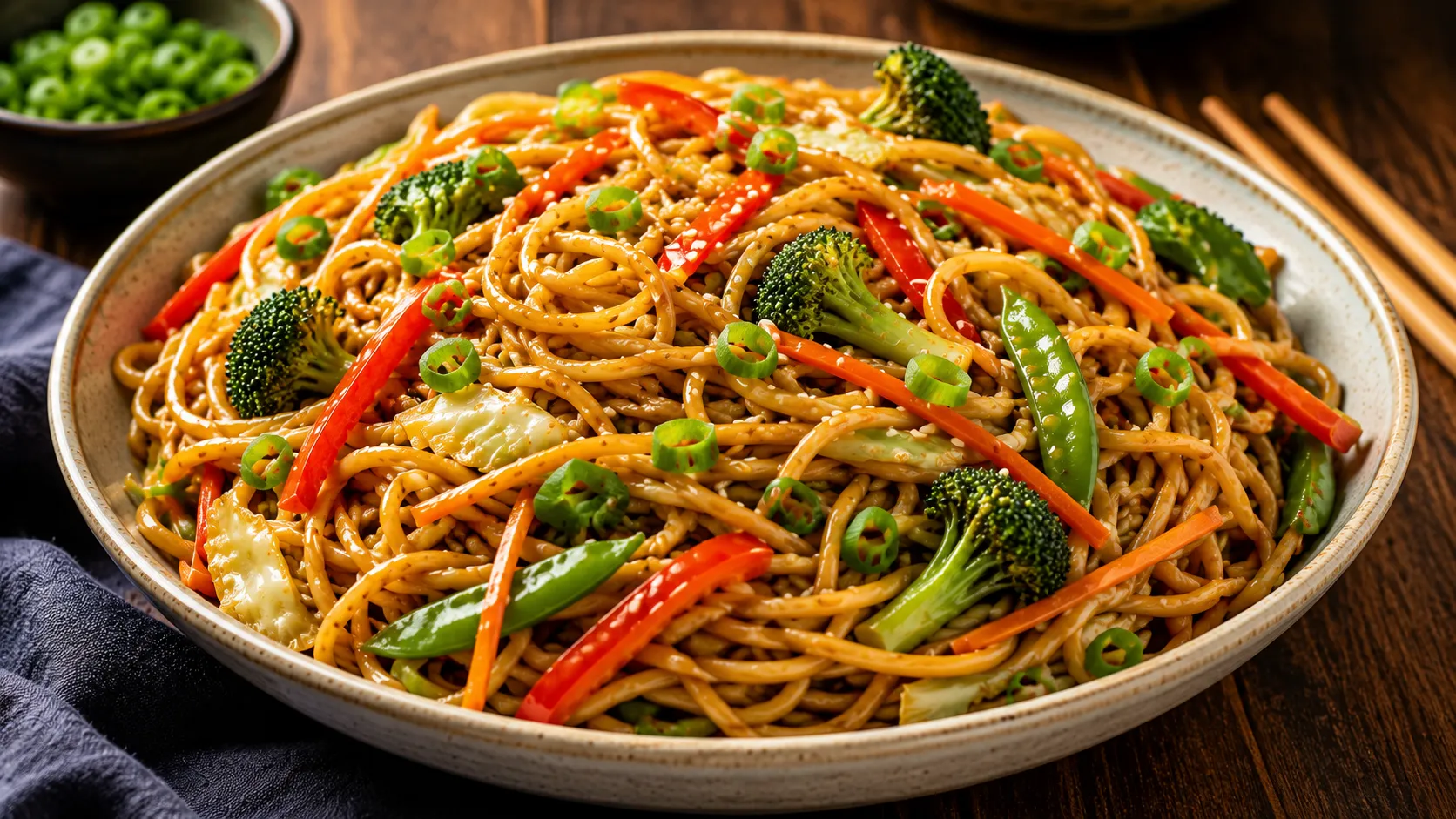
Easy Vegetable Lo Mein Noodles in 20 Minutes
Let me paint you a picture: It’s 6:30 PM on a Tuesday. I’ve just walked in the door after a day that felt like it lasted approximately three years. My stomach is growling loud enough to wake the neighbors, and the last thing I want to do is spend an hour chopping vegetables and standing over a stove. But I also refuse to order takeout for the third time this week.
This exact scenario is how my obsession with Easy Vegetable Lo Mein Noodles began.
I remember the first time I attempted lo mein at home. I was convinced I needed a wok, a jet-engine-powered burner, and some secret technique passed down through generations. I was so intimidated that I almost didn’t try. But desperation (and hunger) are powerful motivators. I grabbed whatever vegetables were languishing in my crisper drawer, boiled some noodles, and threw together a sauce from pantry staples. And you know what? It was good. It wasn’t just good—it was better than the greasy, overly salty version I’d get from the delivery guy.
Over the years, I’ve made this dish more times than I can count. I’ve perfected it, streamlined it, and turned it into my ultimate weeknight superhero. This isn’t about authenticity in the traditional sense—it’s about making a delicious, satisfying meal that comes together faster than you can decide what to watch on Netflix. It’s about using what you have, cleaning out the fridge, and feeling like a culinary genius in 20 minutes flat.
So, grab your largest skillet or wok, and let me show you how I make my foolproof, ridiculously easy vegetable lo mein. Trust me, your future self (the hungry one at 6:30 PM) will thank you.
Why You’ll Love This Easy Vegetable Lo Mein
- Incredibly Fast: We’re talking 20 minutes from start to finish. Faster than delivery, I promise.
- Pantry-Friendly: The sauce uses basic ingredients you probably already have.
- Wildly Customizable: It’s the ultimate clean-out-the-fridge meal. Use whatever veggies you have!
- Way Better Than Takeout: Fresher, less greasy, and you control the salt and flavor.
- Budget-Friendly: A fraction of the cost of ordering in, and it makes a ton.
Ingredients for Your 20-Minute Lo Mein
Here’s the beautiful thing about lo mein: the ingredients are flexible. Below is my go-to combination, but consider this a starting point, not a strict rulebook.
For the Noodles & Vegetables:
- 8 oz (about 225g) dried lo mein noodles or spaghetti (I’ve used regular spaghetti in a pinch—it works perfectly!)
- 2 tablespoons vegetable or canola oil (anything with a high smoke point)
- 3 cloves garlic, minced (or 1 teaspoon of the pre-minced stuff from a jar—no judgment here)
- 1 tablespoon fresh ginger, grated (I keep a knob in my freezer and grate it frozen—game changer)
- 1 large carrot, julienned or cut into matchsticks
- 1 red bell pepper, thinly sliced
- 1 cup snow peas or sugar snap peas
- 2 cups shredded green cabbage (Napa or regular works great)
- 4-5 cremini mushrooms, sliced (Optional, but I love the earthy flavor they add)
- 2-3 green onions, sliced (for garnish at the end)
For the Sauce:
- 1/3 cup low-sodium soy sauce (or tamari for gluten-free)
- 2 tablespoons oyster sauce (Use vegetarian mushroom oyster sauce if you prefer)
- 1 tablespoon dark soy sauce (for color, or use regular soy sauce in a pinch)
- 1 tablespoon brown sugar or honey
- 1 teaspoon sesame oil (Don’t skip this—it gives that signature flavor)
- 1/2 teaspoon white or black pepper
- 1/2 cup water or vegetable broth
Tools You’ll Need:
- A large, deep skillet or a wok (a large non-stick skillet works too!)
- A large pot for boiling noodles
- A colander for draining

How to Make It?
Let’s get cooking. Remember, the key to great lo mein is having everything prepped and ready to go because the cooking part happens fast. I like to call this mise en place, but really, it’s just me being too lazy to chop things while the pan is sizzling.
Step 1: Make the Lo Mein Sauce
Before you even think about turning on the stove, whisk together all the sauce ingredients in a small bowl: the soy sauce, oyster sauce, dark soy sauce, brown sugar, sesame oil, pepper, and water or broth. Set this bowl right next to your stove. This is important! When the cooking gets hot and fast, you don’t want to be fumbling for bottles.
My Pro Tip: I accidentally used dark soy sauce instead of regular once, and my noodles came out almost black! It still tasted amazing, but I learned my lesson. Double-check your bottles!
Step 2: Get the Noodles Boiling
Bring a large pot of salted water to a rolling boil. Add your noodles and cook them according to the package instructions until they are just al dente (firm to the bite). Since we’re going to stir-fry them, you don’t want them to be mushy. Drain them immediately, give them a quick rinse with cool water to stop the cooking, and drizzle with a tiny splash of oil to prevent them from sticking together. Set the colander aside.
Step 3: Heat Your Pan for the Perfect Stir-Fry
Place your large skillet or wok over high heat. And I mean HIGH heat. Let it get nice and hot for about a minute. Then, add your 2 tablespoons of oil. It should shimmer immediately.
Add the minced garlic and grated ginger. Stir-fry for about 30 seconds until they become incredibly fragrant. Be careful not to burn them—if your heat is too high, they can go from golden to bitter in seconds. Burnt garlic is a vibe killer.
Step 4: Stir-Fry the Vegetables
Now, add your harder vegetables first—the carrots and bell peppers. Toss them in the hot oil and let them cook for about 2 minutes. They should start to soften but still have a nice crunch. I love the sound of them sizzling in the pan!
Next, toss in the mushrooms, cabbage, and snow peas. Cook for another 2-3 minutes, stirring constantly, until the cabbage has slightly wilted and the snow peas are bright green. The vegetables should be vibrant and crisp-tender. You don’t want to steam them into a sad, soggy pile.
Step 5: Combine Everything with the Sauce
This is the moment of truth. Turn the heat down to medium. Add your cooked noodles to the pan. Then, pour that delicious sauce you made earlier all over everything.
Using a pair of tongs or two spatulas, toss the noodles and vegetables together. Gently lift and turn the noodles to ensure the sauce coats every single strand. It should only take about 1-2 minutes for everything to heat through and the sauce to thicken slightly and cling to the noodles. You’ll see it transform before your eyes from separate components into a glorious, glossy pile of lo mein.
Step 6: Serve and Garnish
Turn off the heat. Immediately sprinkle your sliced green onions over the top. The residual heat from the noodles will slightly wilt them, releasing their fresh, mild onion flavor. Give it one final gentle toss.
Pro Tips & Tricks for the Best Lo Mein
I’ve learned a few things over my many nights of making this Easy Vegetable Lo Mein. Here are my best secrets for ensuring perfect results every single time.
Prep EVERYTHING First: I cannot stress this enough. Have your sauce mixed, your veggies chopped, and your noodles cooked and drained before you even start the pan. Once you start cooking, everything moves so fast you won’t have time to chop.
The “Earlobe” Noodle Test: When cooking your noodles, they should be tender but still have a slight bite. I call this the “earlobe test”—if it feels like your earlobe when you gently squish it, it’s perfect. Overcooked noodles break apart in the wok and get gummy.
High Heat is Your Friend: Don’t be afraid of the heat! The high temperature is what gives stir-fry that amazing “wok hei” (that subtle smoky flavor from the wok). If your pan isn’t hot enough, the vegetables will steam and get watery instead of searing and getting that beautiful char.
Don’t Overcrowd the Pan: If your pan is too full, the temperature drops, and you’ll end up steaming everything. If you’re making a larger batch, it’s better to cook the vegetables in two batches and then combine them.
Adjust the Sauce to Your Taste: The sauce I’ve written below is perfect for my family, but you can tweak it. Add a teaspoon of sriracha or chili garlic sauce for heat, or add a splash more sesame oil if you love that nutty flavor.
Variations & Substitutions
One of the reasons I love this Easy Vegetable Lo Mein so much is its chameleon-like ability to adapt to whatever is in your kitchen. Here are a few of my favorite ways to shake it up.
The Protein-Packed Version: Sometimes I want a little more substance. I’ll toss in 8 ounces of thinly sliced chicken breast, shrimp, or extra-firm tofu right after the garlic and ginger. Cook the protein through, remove it, and then stir-fry the vegetables. Add it back in at the very end with the noodles.
The Spicy Szechuan Twist: For a fiery kick, add a tablespoon of chili bean paste (doubanjiang) or a generous squirt of sriracha to your sauce. Or, you can toss in some dried red chili peppers along with the garlic for a slow-burning heat.
The Gluten-Free Lo Mein: This is super easy. Swap out the regular soy sauce for tamari or coconut aminos, use a gluten-free oyster sauce (or just use extra soy sauce), and use your favorite gluten-free noodles. I’ve found that rice noodles or gluten-free spaghetti work beautifully.
Serving Suggestions
I honestly eat this as a full meal on its own more often than not. It’s hearty and packed with vegetables, so it’s satisfying enough to be the star of the show.
If you’re looking to round out the meal, here are some of my favorite pairings:
- A Simple Soup: Start with a clear broth like miso or a light egg drop soup.
- Crispy Spring Rolls: The crunch of a spring roll or potsticker is the perfect textural contrast to the soft noodles.
- Sesame-Crusted Edamame: A little bowl of salted edamame on the side is always a hit.
FAQs
Can I use frozen vegetables for this lo mein?
Absolutely! Frozen stir-fry vegetable mixes are a lifesaver on busy nights. Just make sure to thaw them completely and pat them dry with a paper towel before adding them to the hot pan. Excess water will cause the oil to splatter and steam your food instead of searing it.
How do I store leftover lo mein?
Store any leftover lo mein in an airtight container in the refrigerator for up to 4 days. I love this dish cold straight from the fridge, but to reheat it, simply toss it in a hot skillet with a splash of water or soy sauce to loosen up the sauce.
Can I make this lo mein ahead of time?
You can definitely prep the vegetables and make the sauce up to 2 days in advance. However, I recommend cooking the noodles and stir-frying everything fresh. The texture is best right after it’s made, as noodles can absorb sauce and become mushy if left sitting for too long.
What is the best noodle to use for lo mein?
Traditional lo mein uses fresh egg noodles, which are thick, chewy, and slightly yellow. However, they can be hard to find. I use dried lo mein noodles from the Asian grocery store, but regular dry spaghetti or linguine are honestly fantastic substitutes and work perfectly for this recipe.
Why are my noodles sticky?
This usually happens if you don’t rinse them after boiling or if you overcook them. Rinsing with cold water removes excess starch. Tossing them with a little oil also helps keep them separated and clump-free when you toss them in the pan.
Read More Recipes:
- Crispy Sweet and Sour Chicken at Home
- Healthy Kung Pao Chicken for a Quick Dinner
- Easy Chinese Garlic Chicken Stir-Fry Recipe
- Homemade Beef and Broccoli in 30 Minutes
- Cheesy Texas Toast Mozzarella
Give This Easy Vegetable Lo Mein a Try!
There you have it—my go-to recipe for Easy Vegetable Lo Mein Noodles in 20 Minutes. It’s the dish that saves my weeknight dinner plans time and time again. It’s simple, it’s fast, and it’s genuinely delicious.
I hope this recipe becomes a staple in your kitchen just like it has in mine. It’s more than just a meal; it’s a kitchen victory. It’s you, using your instincts and ingredients, to create something wonderful.
Now go ahead, grab your biggest skillet, and get tossing. Let me know how it turns out! Tag me in your photos or leave a comment below with your favorite vegetable combos. I always love hearing how you make this recipe your own. Happy cooking!
Printable Recipe Card
Want just the essential recipe details without scrolling through the article? Get our printable recipe card with just the ingredients and instructions.


