

Better-Than-Takeout Chinese Chicken Fried Rice
I still remember the night I threw my takeout menu in the trash. It was a Tuesday; I was exhausted, and I’d just spent $18 on a container of greasy chicken fried rice that had about four sad pieces of chicken in it. My husband looked at me, fork in hand, and said, “You know, I bet you could make this better.”
Challenge accepted.
That weekend, I stood in my kitchen with a bag of day-old jasmine rice, some leftover chicken breast, and a vague memory of what that takeout version should have tasted like. The first batch was… fine. A little bland. The rice was clumpy. But I was determined.
Fast forward to now, and I’ve made this Better-Than-Takeout Chinese Chicken Fried Rice at least fifty times. I’ve tweaked, burned, over-salted, and finally perfected it. I now make it every single week—usually on Sunday nights to meal-prep for lunches, or on those busy weeknights when I need dinner on the table in under 20 minutes.
And let me tell you, the version I’m sharing with you today? It’s the one that finally made me delete my takeout app for good.
Why You’ll Love This Fried Rice
- It’s ready in 15 minutes. Once your rice is cooked, this comes together faster than you can decide what to order for delivery.
- Way more chicken (and better quality). I use juicy, marinated chicken breast, not those sad, dry scraps.
- No wok? No problem. I make this in a simple non-stick skillet or a cast-iron pan. It works perfectly.
- Budget-friendly. This uses leftover rice and pantry staples. It’s one of the cheapest, most satisfying dinners you can make.
- It’s actually better the next day. I’ll teach you the trick to keeping it moist, so leftovers taste just as good as day one.
Ingredients You’ll Need
For the Chicken Marinade
- 1 large boneless, skinless chicken breast (about 8 oz / 225g), diced into small bite-sized pieces
- 1 tablespoon soy sauce (low-sodium is fine)
- 1 teaspoon sesame oil
- 1 teaspoon cornstarch (this is the secret to velvety, tender chicken)
- 1 teaspoon Shaoxing wine or dry sherry (optional but adds that “takeout” flavor)
For the Sauce / Seasoning Mix
- 3 tablespoons soy sauce (I use Kikkoman because it’s consistent)
- 1 tablespoon oyster sauce (this is non-negotiable for that deep, savory flavor)
- 1 teaspoon sesame oil
- ½ teaspoon white pepper (or black pepper if that’s all you have)
- ½ teaspoon sugar
For the Fried Rice
- 3 cups cold, day-old cooked jasmine rice (see my note below on why this matters)
- 2 tablespoons vegetable oil or avocado oil (divided)
- 2 large eggs, lightly beaten
- ½ onion, diced (about ¾ cup)
- 2 cloves garlic, minced
- 1 cup frozen peas and carrots mix (thawed, or fresh if you have them)
- 3 green onions, sliced (white parts and green parts separated)
- Optional: ½ cup bean sprouts for extra crunch
Substitutions
- Chicken: Swap for shrimp, pork, or firm tofu for a vegetarian version.
- Soy sauce: Use tamari or coconut aminos for a gluten-free option.
- Rice: Brown rice works, but jasmine or long-grain white rice gives the best texture.
- Oyster sauce: Hoisin sauce can work in a pinch, but the flavor will be sweeter.
Step-by-Step: How to Make Better-Than-Takeout Fried Rice
Okay, grab your cutting board, your biggest skillet (or wok if you have one), and let’s do this. I promise this is easier than you think.
Step 1: Marinate the Chicken
In a small bowl, combine your diced chicken with the soy sauce, sesame oil, cornstarch, and Shaoxing wine (if using). Stir until every piece is coated. Let it sit while you prep the rest—this only takes 5-10 minutes, but it makes a world of difference.
Step 2: Prep Everything
Fried rice is fast. I mean fast. Once the heat is on, you don’t have time to chop. So dice your onion, mince your garlic, slice your green onions, and have your peas and carrots ready. I call this “mise en place,” but really, it’s just not wanting to panic while my pan is smoking.
Step 3: The “Wok Hei” Trick at Home
Heat 1 tablespoon of oil in a large skillet or wok over high heat. We want it screaming hot—so hot that a drop of water sizzles and dances immediately. Add your marinated chicken in a single layer. Don’t touch it for 2 minutes. Let it sear and get that golden-brown crust. Then stir-fry for another 2-3 minutes until cooked through. Transfer to a clean plate and set aside.
Step 4: Cook the Eggs
Turn the heat down to medium. Add the other 1 tablespoon of oil. Pour in your beaten eggs and let them sit for 30 seconds before scrambling. You want soft, fluffy curds—not dry, browned bits. When they’re just set (still slightly shiny), scoop them out onto the same plate as the chicken.
Step 5: Aromatics
Add a splash of oil to the pan if it looks dry. Toss in the diced onion and the white parts of your green onions. Cook for about 1-2 minutes until the onion turns translucent and smells incredible. Throw in the garlic and cook for another 30 seconds—don’t let it burn!
Step 6: The Rice (This is Where Magic Happens)
Crank the heat back up to high. Add your cold, day-old rice, breaking up any clumps with your spatula or fingers before it goes in the pan. If the rice is clumpy, it will steam instead of fry.
Spread the rice out and let it sit untouched for 1 minute. You want it to get slightly crispy and charred on the bottom—that’s the “fried” part of fried rice. Then stir-fry, tossing frequently, for about 2-3 minutes. The rice should start popping and smelling nutty.
Step 7: Seasoning
Pour your pre-mixed sauce over the rice. I stir it like a madwoman here, making sure every grain gets that beautiful golden-brown color. This is when the aroma hits and your family starts wandering into the kitchen.
Step 8: Add Everything Back
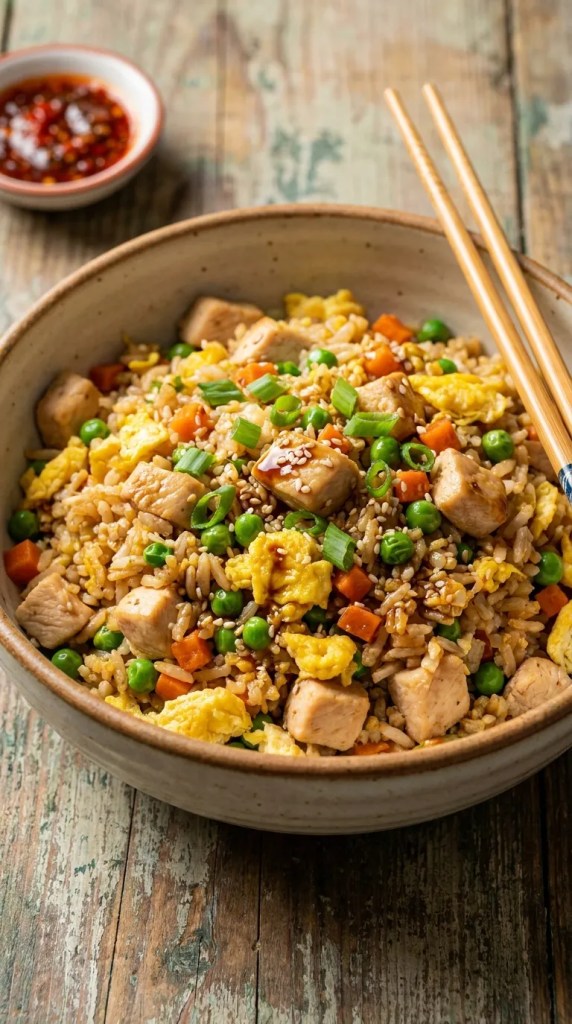
Return the cooked chicken and scrambled eggs to the pan. Add the peas and carrots, plus the green parts of your green onions. Toss everything together for 1-2 minutes until everything is heated through and well-combined. The colors should be vibrant—golden rice, green peas, orange carrots, and browned chicken.
Step 9: Finish and Serve
Taste it. I always sneak a bite here. Add a little more soy sauce or white pepper if it needs it. Remove from heat and serve immediately.
Pro Tips (Learned from My Mistakes)
Day-old rice is not a suggestion—it’s a rule. Freshly cooked rice has too much moisture. It will turn into a sticky, gluey mess. If you’re in a pinch, spread fresh rice on a baking sheet and stick it in the fridge for 30 minutes. It’s not the same, but it works in a bind.
High heat is your best friend. One of my biggest early mistakes was being scared of high heat. I’d cook everything on medium, and my rice would steam instead of fry. It would end up pale and soft. Crank it up! The high heat creates that smoky, charred “wok hei” flavor at home.
Cornstarch is a game-changer. I used to skip marinating the chicken. I’d just toss raw chicken into the pan, and it would be dry and tough. The cornstarch creates a protective coating that locks in moisture. It’s exactly what takeout places do.
Don’t overcrowd the pan. If you have to, cook the chicken in batches. If the pan is too full, the chicken will steam and release water. You want it to sear and get browned.
Use a spatula and get aggressive. Fried rice benefits from a little manhandling. Use a metal spatula (if your pan allows it) to break up rice clumps and “chop” through everything as you stir-fry.
Variations & Substitutions
Shrimp Fried Rice
Replace the chicken with 1 lb of peeled and deveined shrimp. Cook them for 1-2 minutes per side until pink and curled. Remove them, then add back at the end so they don’t overcook.
Vegetarian Tofu Fried Rice
Substitute firm, pressed tofu cubed into ½-inch pieces. Toss in the cornstarch mixture and pan-fry until golden and crispy. It’s equally satisfying and absorbs the sauce beautifully.
Spicy Szechuan Style
Add 1 tablespoon of chili oil (like Lao Gan Ma) along with the sauce. Add a teaspoon of Szechuan peppercorns when you cook the aromatics for that signature numbing heat.
Pineapple Chicken Fried Rice
Add ½ cup of diced fresh or canned pineapple at the very end, just to warm through. It sounds odd, but the sweet and savory combo is heavenly, and it’s a huge hit with my kids.
Serving Suggestions
This Better-Than-Takeout Chinese Chicken Fried Rice is a full meal on its own. But I love pairing it with a simple cucumber salad on the side for something fresh and crunchy.
For a lighter dinner: Serve it alongside a bowl of miso soup or a light vegetable spring roll.
For a feast: Pair with potstickers or dumplings. I set up a little dipping sauce bar (soy sauce, chili oil, and black vinegar) for people to customize.
For meal prep: This is my go-to work lunch. I portion it into glass containers, and it stays fresh and flavorful for 3-4 days in the fridge.
FAQs
How do I get my rice to be dry enough?
Spread it on a baking sheet and refrigerate uncovered for an hour. Day-old rice that’s been chilling in the fridge is ideal because it has had time to dry out. If you’re in a rush, use a fan to blow air over freshly cooked rice for about 20 minutes.
Can I use brown rice?
Yes, but it will have a nuttier, chewier texture. It also takes a bit longer to stir-fry. If you do, make sure it’s cold and dry.
Why is my fried rice mushy?
Too much moisture! The biggest culprits are: using fresh rice, not draining your peas and carrots thoroughly, or adding too much sauce at once. Stir-fry the rice for a minute or two before adding the sauce to evaporate some of the moisture.
How do I store leftover fried rice?
Place it in an airtight container and refrigerate for up to 4 days. To reheat, use a hot skillet with a splash of oil to bring back the texture, or microwave it with a damp paper towel over top.
Can I freeze this?
You can! Freeze it in portions for up to 2 months. Thaw in the fridge overnight and reheat in a hot skillet. The texture won’t be quite as good, but it’s still a lifesaver on busy nights.
Is this gluten-free?
Yes, if you use tamari or coconut aminos instead of regular soy sauce and check your oyster sauce for gluten (some brands contain wheat). I’ve made it this way for my gluten-free friends and they couldn’t tell the difference.
Read More Recipes:
- Easy Apple Cinnamon Muffins with Crumb Topping
- Easy Vegetable Lo Mein Noodles
- Crispy Sweet and Sour Chicken
- Healthy Kung Pao Chicken for a Quick Dinner
- Easy Chinese Garlic Chicken Stir-Fry Recipe
Final Thoughts
I used to think Chinese takeout was the only way to get that smoky, savory fried rice I craved. But the truth is, the stuff I make in my own kitchen is better, cleaner, and way more satisfying. No hidden ingredients, no questionable oil—just real food made with love (and a little bit of high heat).
My kids now prefer this to any takeout version. My husband requests it every week, and my friends ask for the recipe every time I serve it. It’s become the ultimate comfort food in our house, and I know it’s going to become one in yours, too.
So go ahead—ditch the takeout menu. Grab that leftover rice from the fridge. And get ready to taste the best fried rice you’ve ever made.
Let me know in the comments if you made it! Did you add extra veggies? Did you go spicy? I love seeing your creations, so tag me on Instagram or leave a comment below.
Happy stir-frying!


