
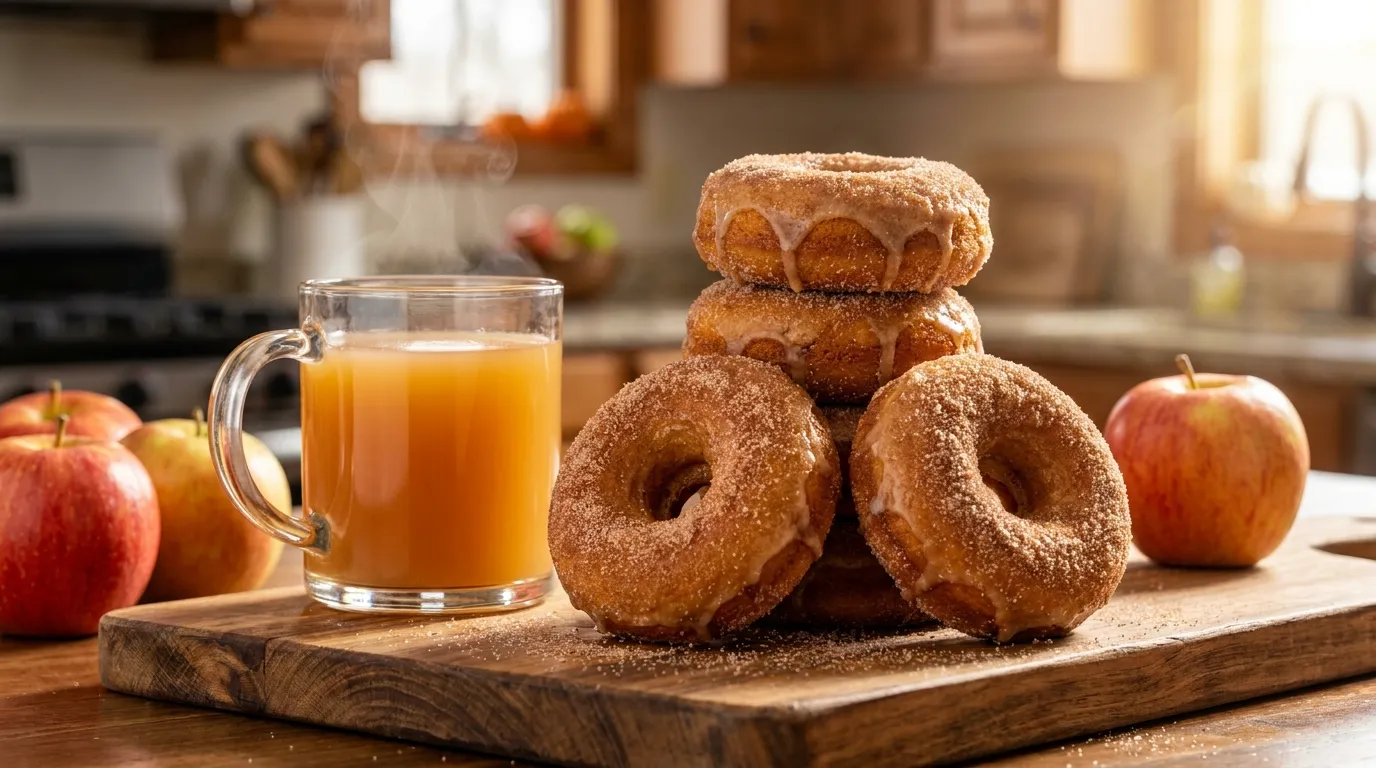
Baked Apple Cider Doughnuts: Easy Fall Favorite
You know that first crisp morning when the air smells like apples, and you suddenly need doughnuts? Skip the fryer. These baked apple cider doughnuts deliver all the cozy flavor without the oil splatters or greasy fingers. They come out soft, spiced, and coated in cinnamon sugar that sticks just right. Ready to make your kitchen smell like a fall bakery in under an hour?
Why These Doughnuts Hit Different
Most people default to fried doughnuts, but baking changes the game. You get that tender crumb and deep apple flavor without standing over hot oil. The reduced cider concentrates every bit of autumn into the batter.
Plus, cleanup stays simple. One bowl, a muffin pan or doughnut pan, and you are done. No leftover oil to deal with later. IMO, that alone makes these worth repeating every weekend from September through November.
They also freeze like a dream. Bake a double batch once, and you have breakfast sorted for busy mornings.
The Secret Power of Reduced Apple Cider
Fresh apple cider is good. Reduced apple cider is magic. Boiling it down removes water and leaves pure, intense apple taste. That concentrated liquid soaks into the dough and keeps everything moist.
You only need about two cups of cider to start. Simmer it until it shrinks to half a cup. The kitchen will smell incredible while it reduces. Do not walk away—watch it so it does not burn or go too far.
Once cooled, that sticky cider becomes the star of the wet ingredients. It pairs perfectly with warm spices and a touch of vanilla.
Choosing the Right Cider
Grab fresh, unfiltered apple cider if you can find it. The cloudy kind with sediment at the bottom packs more flavor. Avoid the clear juice labeled “apple juice”—it lacks the depth these doughnuts need.
If your store only carries sweetened cider, that still works. Just taste the reduced version and adjust any extra sugar later.
Ingredients You Actually Need
Nothing fancy here. Most of this already lives in your pantry.
Dry ingredients:
- 2 cups all-purpose flour
- 1 ½ teaspoons baking powder
- ½ teaspoon baking soda
- 1 teaspoon ground cinnamon
- ½ teaspoon ground nutmeg
- ¼ teaspoon ground allspice
- ½ teaspoon salt
- ½ cup packed light brown sugar
- ¼ cup granulated sugar
Wet ingredients:
- ½ cup reduced apple cider (from about 2 cups fresh)
- ½ cup buttermilk (or milk + a splash of vinegar)
- 2 large eggs
- ¼ cup melted butter or neutral oil
- 1 teaspoon pure vanilla extract
For the cinnamon-sugar coating:
- ½ cup granulated sugar
- 1 tablespoon ground cinnamon
- 3 tablespoons melted butter for brushing
That is the full list. No weird specialty items required.

Step-by-Step: How to Bake Them
Preheat your oven to 350°F. Grease a doughnut pan or a regular muffin pan if that is what you own. Muffin pans work fine—you just get doughnut “holes” with a different shape.
First, reduce the cider. Pour two cups into a small saucepan and simmer over medium heat until it measures half a cup. Cool it completely. Hot cider will scramble the eggs later.
In a large bowl, whisk together flour, baking powder, baking soda, cinnamon, nutmeg, allspice, salt, brown sugar, and granulated sugar. Break up any brown-sugar clumps with your fingers.
In a separate bowl, whisk the cooled reduced cider, buttermilk, eggs, melted butter, and vanilla until smooth.
Pour the wet mixture into the dry ingredients. Stir gently with a spatula until just combined. A few small lumps are fine. Overmixing makes tough doughnuts, and nobody wants that.
Spoon the batter into the prepared pan. Fill each cavity about two-thirds full. A piping bag or zip-top bag with the corner snipped makes this neat and fast.
Bake for 12–15 minutes. The tops should spring back when lightly pressed and a toothpick should come out clean. Do not overbake—these dry out quickly past the perfect point.
Let them cool in the pan for five minutes, then turn them out onto a wire rack.
While they are still warm, brush each doughnut with melted butter and toss in the cinnamon-sugar mixture. The butter helps the coating stick and adds extra richness.
Tips That Actually Make a Difference
Room-temperature eggs and buttermilk mix better and create a smoother batter. Cold ingredients can make the melted butter seize up.
If you only have a muffin pan, fill the cups halfway and press a small ball of foil into the center of each to create a rough doughnut shape. Remove the foil after baking.
Want extra apple flavor? Add a tablespoon of finely grated fresh apple to the batter. It disappears into the crumb but leaves behind more moisture and taste.
For the coating, mix the cinnamon and sugar while the doughnuts bake so it is ready the second they come out. Warm doughnuts grab the sugar best.
Store leftovers in an airtight container at room temperature for up to two days. After that, freeze them. Reheat frozen doughnuts in a 300°F oven for about eight minutes, and they taste almost fresh.
Easy Variations Worth Trying
Once you nail the basic version, play around.
Swap half the flour for whole wheat pastry flour for a slightly nuttier taste. The texture stays soft.
Add a pinch of cardamom or a tiny bit of ground ginger for a warmer spice profile.
Make a simple glaze instead of the cinnamon sugar. Mix one cup powdered sugar with two tablespoons of the reduced cider and a splash of milk. Dip the cooled doughnuts and let the glaze set.
For a grown-up twist, brush the warm doughnuts with a little maple syrup before the cinnamon sugar. The maple and apple combination feels fancy without any extra work.
Mini doughnuts bake faster—check them at the ten-minute mark. They make great party snacks or lunchbox treats.
Common Mistakes and How to Dodge Them
Overmixing ranks as the number-one way to ruin these. Stop stirring the moment the flour disappears.
Skipping the cider reduction leaves the doughnuts tasting bland. That step is non-negotiable for real apple flavor.
Baking too long dries them out. Set a timer and start checking early.
Coating cold doughnuts fails. The butter and sugar need warmth to stick properly. Work in batches if needed.
Using old baking powder or soda leads to dense results. Check the dates if your doughnuts refuse to rise.
FAQs
Can I make these without a doughnut pan?
Yes. A standard muffin pan works. You get round “doughnut muffins” that taste identical. Some people even use a mini muffin pan for bite-sized versions.
How do I know when the cider is reduced enough?
Measure it. Start with two cups and stop when you have half a cup left. It should look slightly syrupy and coat the back of a spoon.
Can I use apple juice instead of cider?
You can, but the flavor will be milder. Reduce it the same way and consider adding a little extra cinnamon or a drop of apple extract if you have it.
Do these freeze well?
Extremely well. Freeze the uncoated doughnuts in a single layer, then transfer to a freezer bag. Coat them after reheating for the best texture.
Why did my doughnuts turn out dense?
Usually overmixing or expired leaveners. Mix only until combined and always check that your baking powder and soda still fizz when tested in water.
Can I make the batter ahead of time?
Not really. The baking powder starts working as soon as it meets liquid. Bake the batter within thirty minutes of mixing for the lightest result.
Read More Recipes:
- Apple Cider Bundt Cake with Cinnamon Glaze
- Gluten-Free Apple Cider Loaf
- Warm Spiced Apple Cider Coffee Cake
- Easy Apple Cider Donut Bread
- Homemade Classic Apple Cider Cake
Final Thoughts
These baked apple cider doughnuts prove you do not need a deep fryer to enjoy bakery-level treats at home. The reduced cider does the heavy lifting on flavor, the oven keeps things simple, and the cinnamon-sugar coating finishes the job. Make a batch this weekend. Your kitchen will smell amazing, and you will wonder why you ever bothered with the fried version.


Baked Apple Cider Doughnuts
Ingredients
Method
- Preheat the oven to 350°F (175°C) and lightly grease a 12-cavity doughnut pan.
- Pour the apple cider into a saucepan and simmer over medium heat until reduced to about ¾ cup; let it cool slightly.
- In a bowl, whisk together the flour, baking powder, baking soda, salt, cinnamon, and nutmeg.
- In another bowl, whisk together the melted butter, sugar, egg, vanilla, buttermilk, and reduced apple cider.
- Gradually add the dry ingredients to the wet ingredients and stir just until combined; do not overmix.
- Spoon or pipe the batter evenly into the prepared doughnut pan, filling each cavity about three-quarters full.
- Bake for 12–15 minutes, or until the doughnuts are lightly golden and a toothpick inserted into the center comes out clean.
- Let the doughnuts cool in the pan for a few minutes, then transfer them to a wire rack.
- Brush each doughnut with melted butter.
- Combine the sugar and cinnamon in a shallow bowl, then gently coat each doughnut in the cinnamon-sugar mixture.
- Serve warm or at room temperature.
Notes
- Use fresh apple cider for the best flavor.
- Reducing the cider concentrates its natural apple flavor and gives the doughnuts a richer taste.
- Avoid overmixing the batter to keep the doughnuts light and tender.
- The doughnuts are best enjoyed fresh but can be stored in an airtight container for up to 2 days.
- For extra fall flavor, add a small pinch of ground cloves or allspice to the batter.
DID YOU MAKE THIS EASY RECIPE?
If you have, then share it with us by sending a photo. We’re excited to see what you've made:-)Printable Recipe Card
Want just the essential recipe details without scrolling through the article? Get our printable recipe card with just the ingredients and instructions.


